Side Effects, Coping and Real LessonsChemo and how I dealt with it.
We suffer more often in imagination than in reality
Lucius Annaeus Seneca
In the end, you do what you have to do, and there I was, mentally signed up for chemo. The hours just before the first infusion were the worst—my mind ran wild with “what ifs,” imagining every possible complication. The irony was that the anticipation was far worse than the reality: that first round felt more like a heavy flu than a horror movie, and apart from watching the last tiny hairs leave my head, it wasn’t as unbearable as I had feared.
Because I like to feel prepared, I read everything I could about protecting healthy cells during treatment and found several articles and blogs suggesting a 48–72‑hour fast before chemo. I thought, “I’ve already done so much, why not this?” and by then I was practically a fasting pro. For my second round, I went in with an empty stomach—and tolerated the infusion itself well—until the next morning, when I got up feeling “fine,” went to brush my teeth, and promptly fainted in the bathroom. My family had to carry me back to bed, my mouth still full of toothpaste foam; Mahesh briefly thought I’d had a seizure. It was scary and, in a dark way, a little funny—but it was also a clear sign I’d pushed my body too far. Fasting before chemo might work for some, but for me, that time, it did not.
By the third round, the cumulative fatigue was real, but something else was true too: apart from a 3–4 day “down time” after each infusion, I was surprisingly active. I was still doing school runs, light housework, short walks, and bits of normal life. Chemo was hard, but between realistic expectations, listening (at least a bit more) to my body, and all the groundwork I’d done with food and lifestyle, it became something I could move through rather than something that completely defined me.
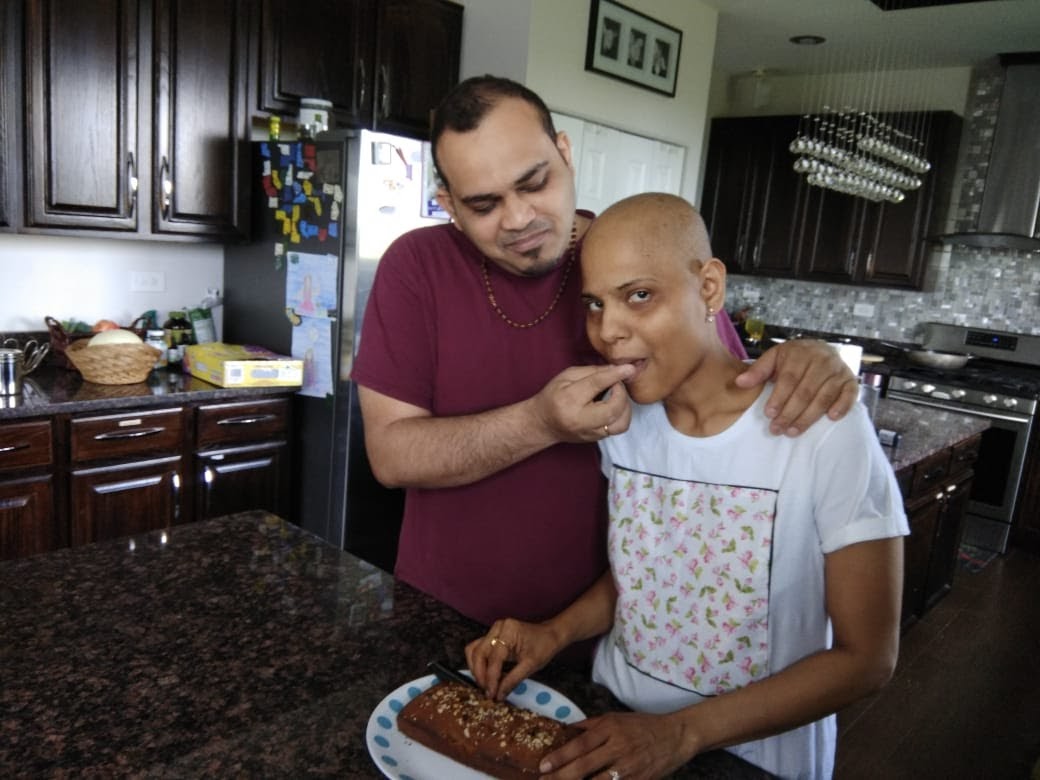
There are many things I admire about my husband, but cancer made me see him in a completely new light—it felt like falling in love with him all over again. His biggest strength is his ability to laugh things off and not react impulsively. At the same time, there were moments that drove me crazy. On the third day after my third chemo, I came downstairs to find him binge‑watching “Prison Break” with our daughter, who had been awake for two hours, and he still hadn’t given her breakfast, just waiting for our help to wake up.
I remember feeling furious—why couldn’t he just switch off the TV, be more present with her, and cover for the time I couldn’t? Only later did I realise that this was his way of coping, much like how many of us numbed out with binge‑watching during the pandemic. Through what was probably the hardest year of our lives—financially, physically, and emotionally—he never once said anything that made me lose hope. His steady, almost stubborn optimism embodied that saying, “Life is 10% what happens to you and 90% how you react to it.” If he had joined me in my lowest moments of fear and self‑pity instead of balancing them, our story today might have looked very different.
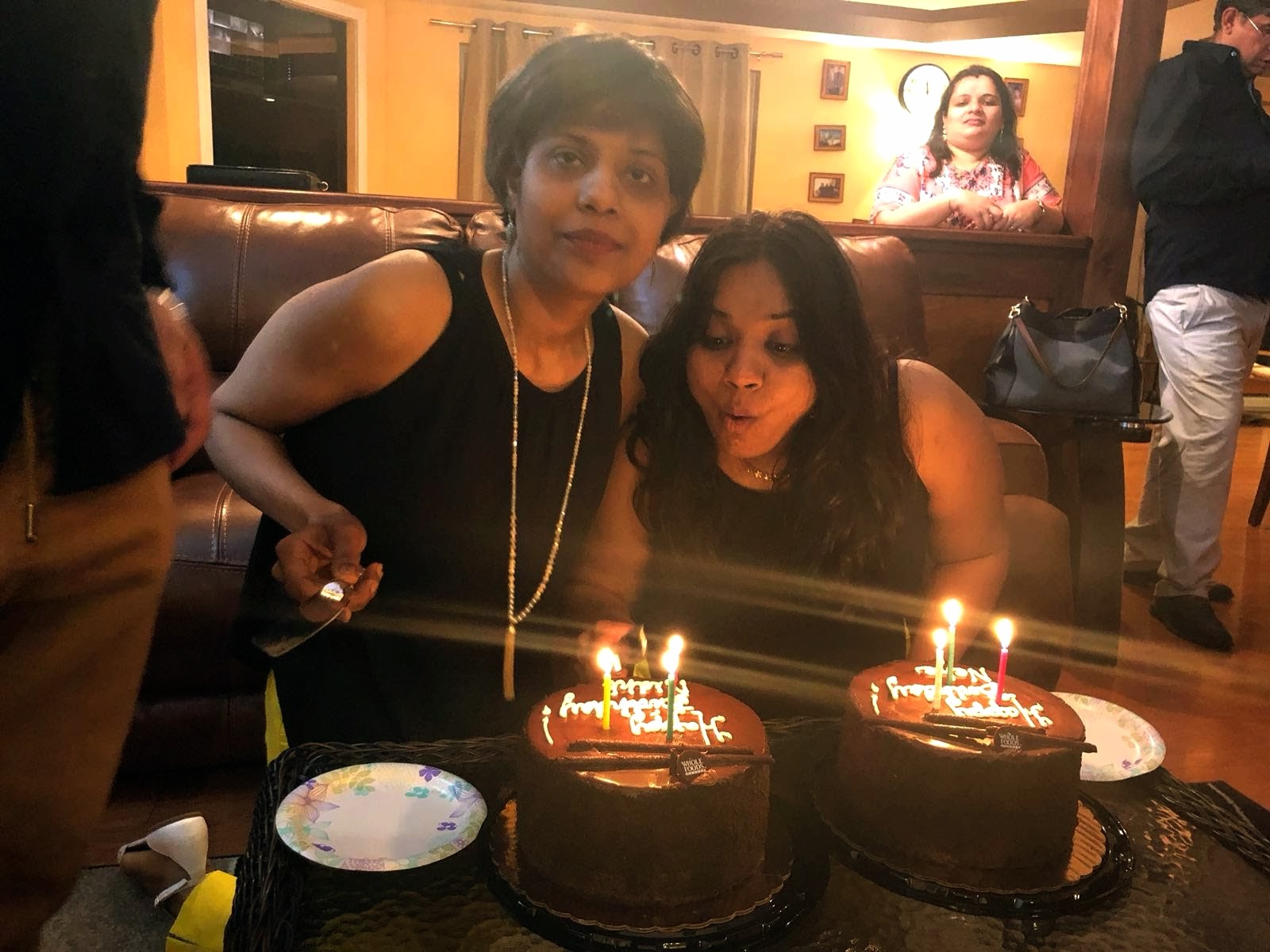
In April 2018, Nidhi and I had a grand birthday celebration, lovingly orchestrated by Annu. The nausea was intense and nothing—food or water—tasted right, but being together on our birthday after so many years, wrapped in the warmth of family and friends, made the day feel deeply special despite everything.
- Brain fog (chemo brain): Around day three, when the steroids stopped, my thinking felt scrambled. I’d watch a video and forget it an hour later, start one task and jump to three others, unable to focus or recall simple things. It felt like reduced mental sharpness, but the odd comfort was that others didn’t notice it as much as I did.
- Loss of taste: Food often tasted like metal, sawdust, or was strangely bitter or overly sweet—anything but normal. Cannabis helped with appetite, but taste buds were another story.
- Fatigue: Some days it felt as if I had nothing left inside me. Even opening my eyelids or reaching for a water bottle needed planning and mental pep‑talks.
- Nausea: For some it starts late, for some right away, but at some point it usually shows up.
- Diarrhoea/constipation: I swung from needing stool softeners to suddenly having diarrhoea after the second round. Everyone’s body reacts differently, but most people experience at least one of these.
- Dark thoughts: Suicidal thoughts flashed in and out. The key for me was not feeling ashamed of them—most people hit a low point—but watching them pass without acting on them. In many ways, having the thought and still choosing to stay became its own proof that I wanted to live.
By the fifth round, I almost felt like giving up, but I kept reminding myself: you’ve come this far; don’t turn back now. These are the small things that helped me the most:
- Lots of water
Water really did feel like medicine. Even when just lifting a bottle felt like work, every sip gave me a tiny bit of energy—enough to get down the stairs or eat a few bites. Kid‑style sippy cups or bottles with straws made it easier when I was too weak to sit up properly. In later rounds, when water itself tasted metallic and awful, I still pushed through because even a 1% lift in energy felt huge. Whether you’re sick or not, hydration is one of the most underrated tools for your body. - Gentle movement
Even 15–20 minutes of very light exercise made me feel more alive. Emotions and movement are connected both ways: when you feel low, your body slumps, but deliberately changing your posture, walking, or stretching can send a different signal back to the brain. Moving my body gave my mind a pattern break from negative thoughts and helped my mood more than I expected. - Journaling (including “burn” pages)
Alongside a gratitude journal, I kept space to vent honestly. Some days I needed to complain, rage, or write down the ugliest thoughts just to get them out of my head. Writing them on paper and then burning that page became a small ritual: my feelings were acknowledged, then released. It may sound symbolic, but just as old cards from our kids can bring back waves of love, putting pain on paper can soften its grip. Found this video very powerful, check it out if you have time: Write Your Way to Your Subconscious | Dandapani | Goalcast – Bing video - Cannabis
For me, cannabis was like “sanjeevani buti.” It eased pain from growth‑factor injections, helped me feel hungry when food repulsed me, and gave a light, gentle high that made it easier to open up emotionally to my twin and my husband. As treatment went on and side effects accumulated, it felt a bit less powerful, but even the relief it gave early on made it worth considering in discussion with my care team. - Selective socialising
I often didn’t feel like going out—wigs, beanies, and scarves alone were a project—but short outings helped. Being around people and normal life reminded me that there was a world beyond chemo chairs, scans, and test results, and that a different chapter would eventually open, one where I could live more on my own terms. Having Annu gently nudge me to step out made a real difference. - Mouth care (Biotene rinse)
Chemo breath and dry mouth are real. My mouth sometimes felt like a stinky gutter, and it got worse with each round. Biotene dry‑mouth oral rinse gave temporary but real relief and made it easier to eat and talk without feeling self‑conscious. - Tart, simple “chews”
When it felt like there was permanently something bitter and unpleasant in my mouth, small things like amla, ginger with a bit of honey, or tamarind chews (as low‑sugar as possible) helped cut through the taste. Constantly spitting wasn’t an option—I needed every drop of fluid I could keep—so having something small to suck or chew on eased that 24/7 mouth irritation just enough to be bearable.
Continue Reading: Between surgery and chemo
 Beyond Limits: Finding Myself Through Cancer, H4 and Career